PROJECT SCOPE
End-to-End Design Process
ROLE
Product Designer
PROJECT DURATION
3 Months
MOODSTREAM
A movie and tv streaming app using generative AI and conversational search to match content.
PROBLEM
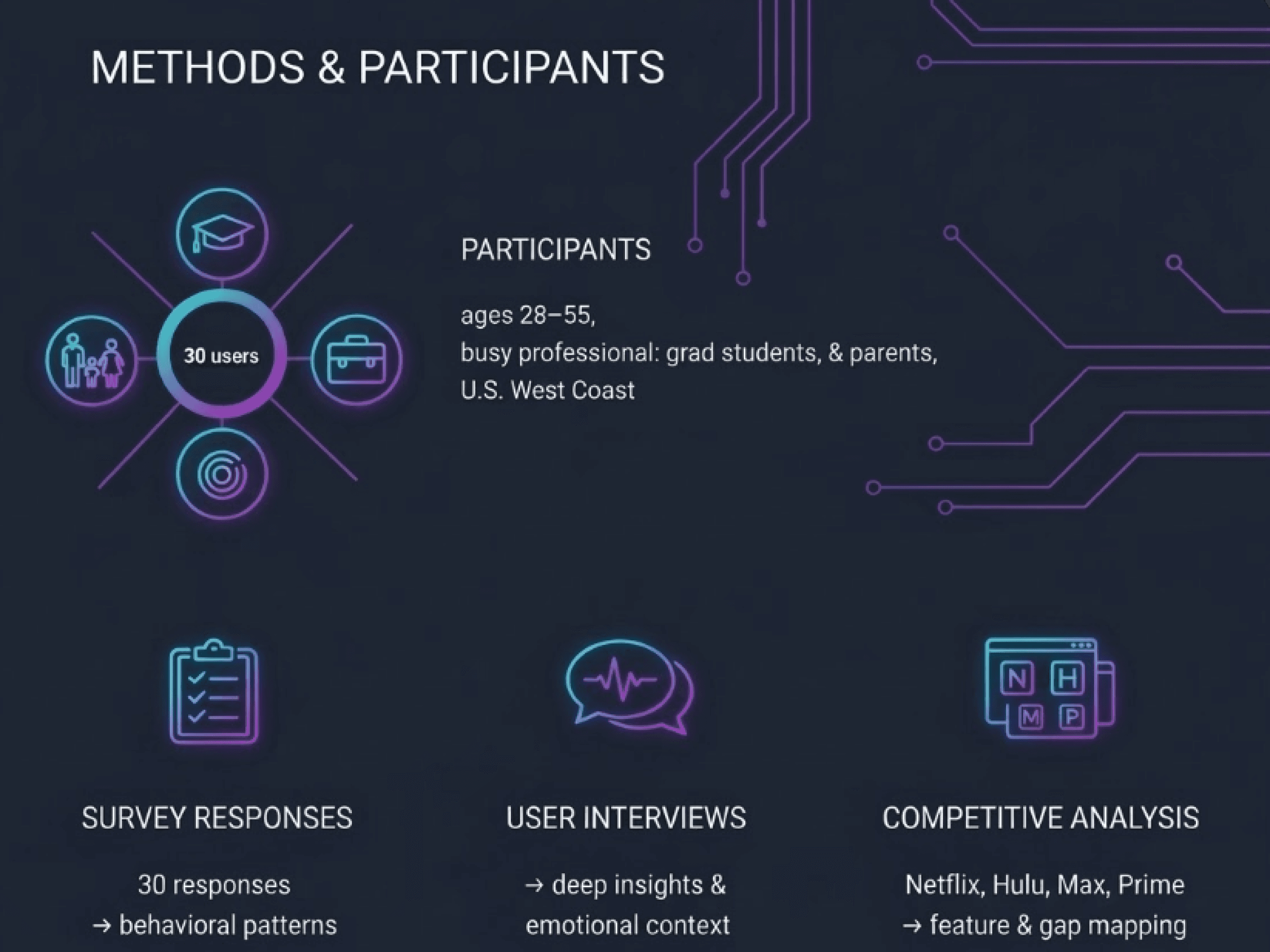
RESEARCH INSIGHTS
INSIGHT #1
Decision fatigue stems from cognitive overload, emotional depletion, & fear of wasting time.
INSIGHT #2
Emotional Reality: It’s not just about finding something to watch; when search feels like work, watching stops being relaxing.
INSIGHT #3
Most platforms optimize for efficiency, not empathy. Our solution aims to bridge that gap with conversational intelligence that understands context, emotion, & intent.
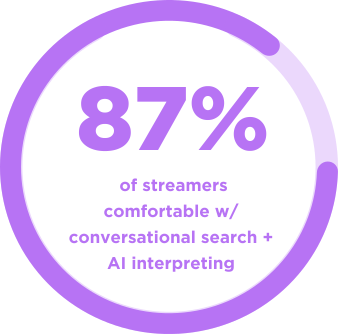
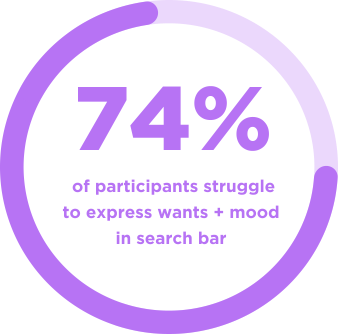
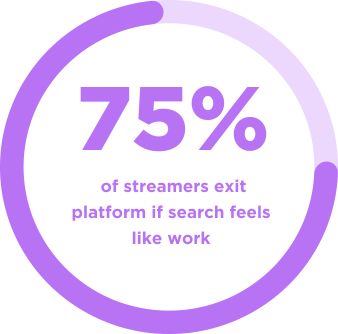
TARGET USERS
Research revealed that users often know how they want to feel, but not what they want to watch. While some prioritize speed and efficiency, others seek recommendations that reflect their emotional state. These personas represent the primary user needs that informed Moodstream's mood-based discovery experience.
PERSONA #1
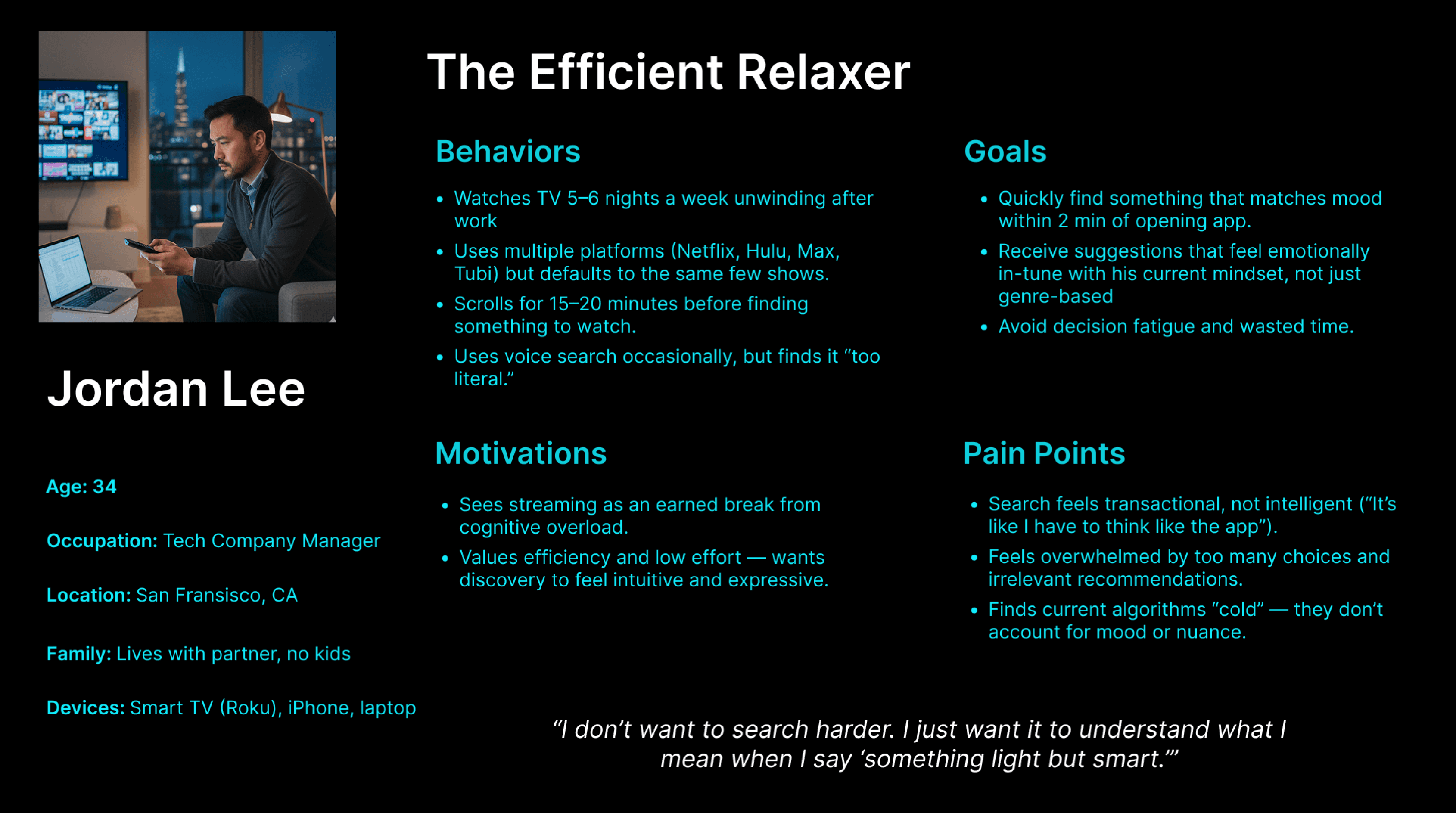
POV STATEMENT:
Jordan needs to effortlessly find content that matches his mood because the stress of endless scrolling makes relaxation feel more
like work.
PERSONA #2
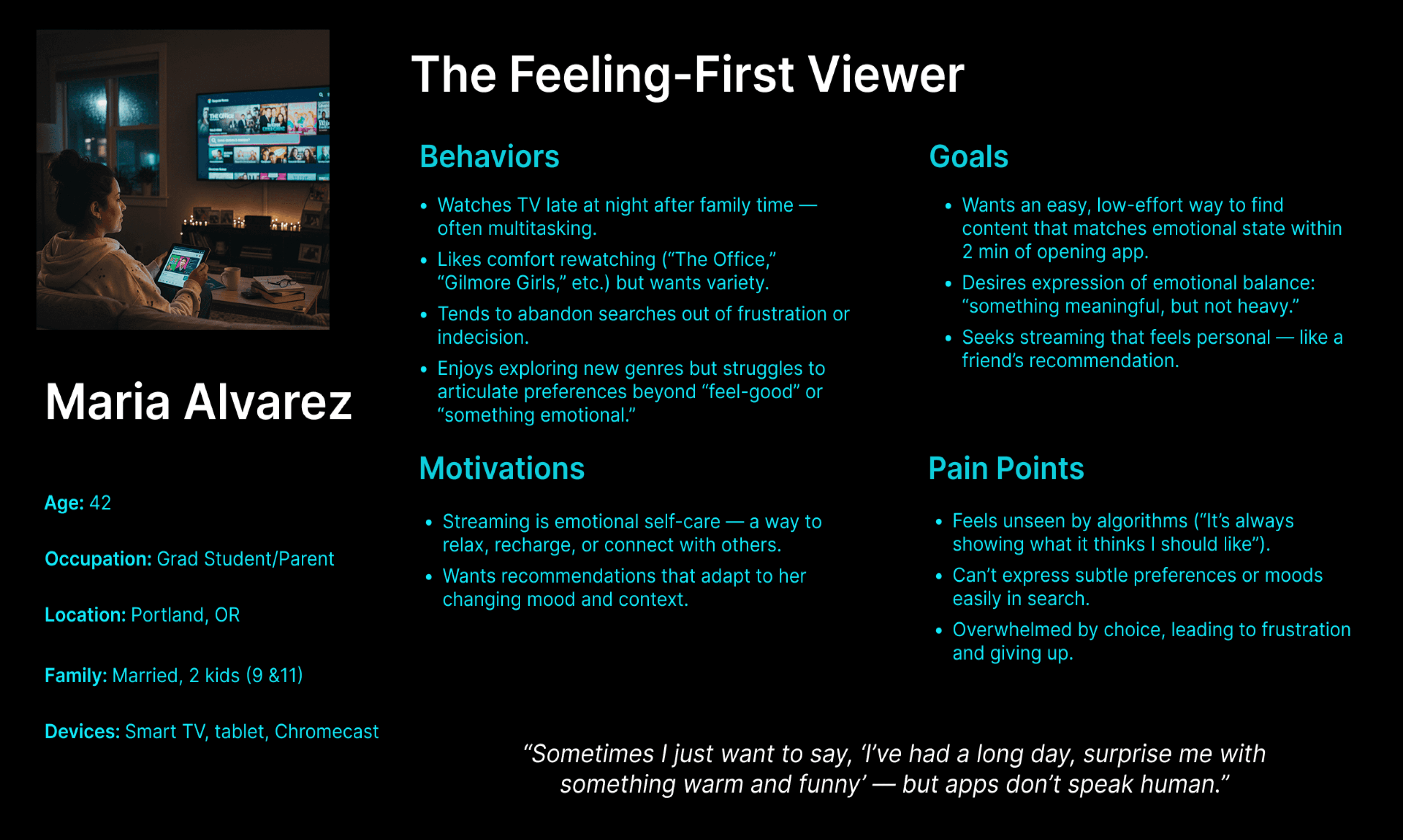
POV STATEMENT:
Maria needs a search experience that understands her mood and intentions, not just her words, because when the app fails to capture her emotional context, she feels unseen and disengages entirely.
This led me to consider:
HOW MIGHT WE...
How might we reduce the time it takes the user to find something satisfying to watch after work (under 2 min) ?
How might we allow the user to tune the emotional tone of suggestions through intuitive controls or feedback?
How might we help the user recover from decision fatigue by simplifying or gamifying discovery moments?
IDEATION
TASK FLOW “2 Minute Mood Check”
GOAL: Find something to match mood within 2 minutes of opening app

LAYING THE FOUNDATION (WIREFRAMES)
Based on research insights, I focused on the main desires of the personas - finding something to watch in under 2 minutes that matches their mood and conversational search options.
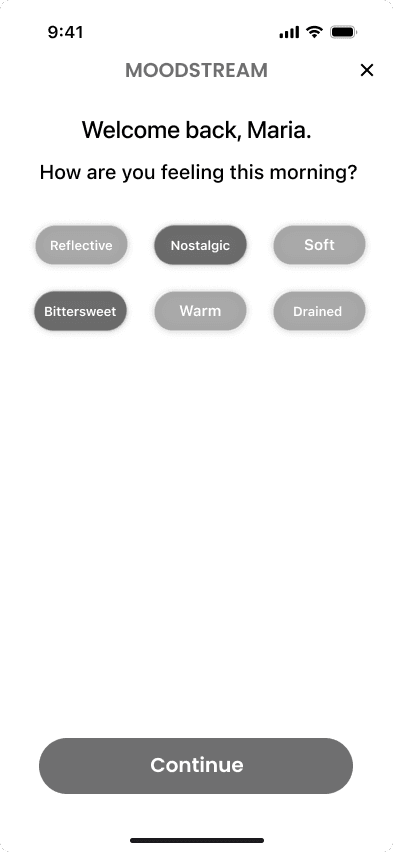
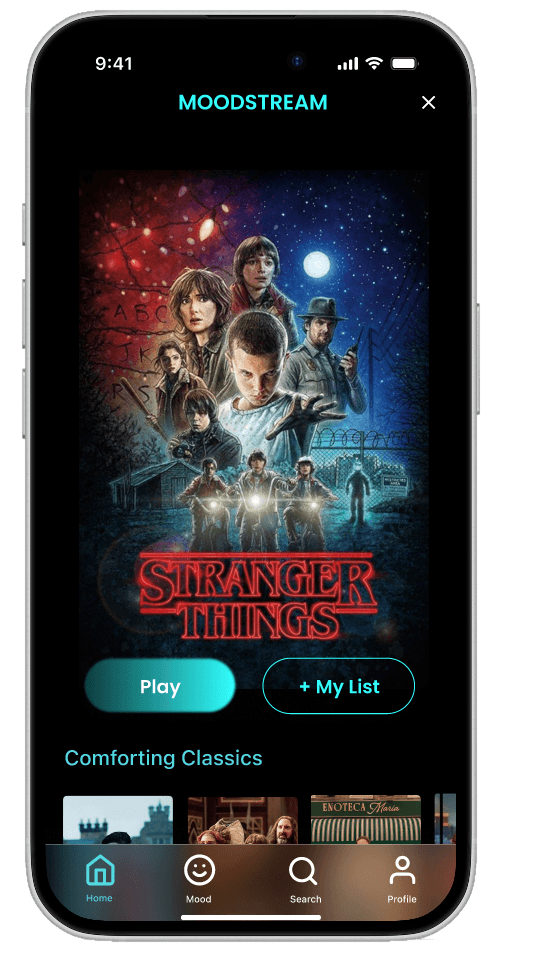
MOOD CHECK-IN
AI anticipates user's routine & asks simple questions to match content to user's needs.
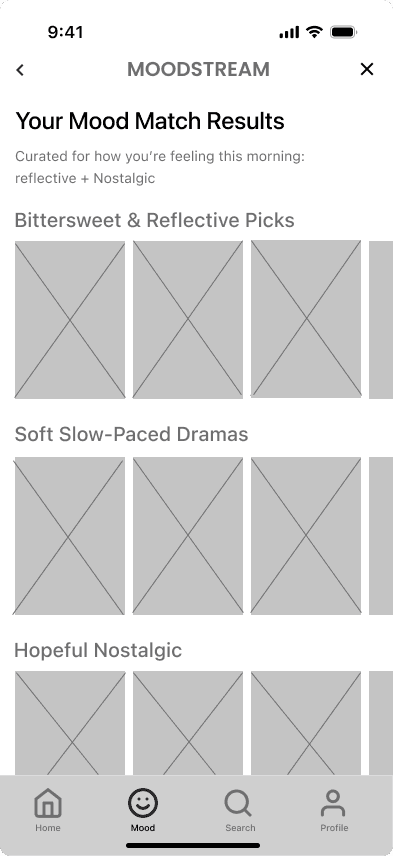
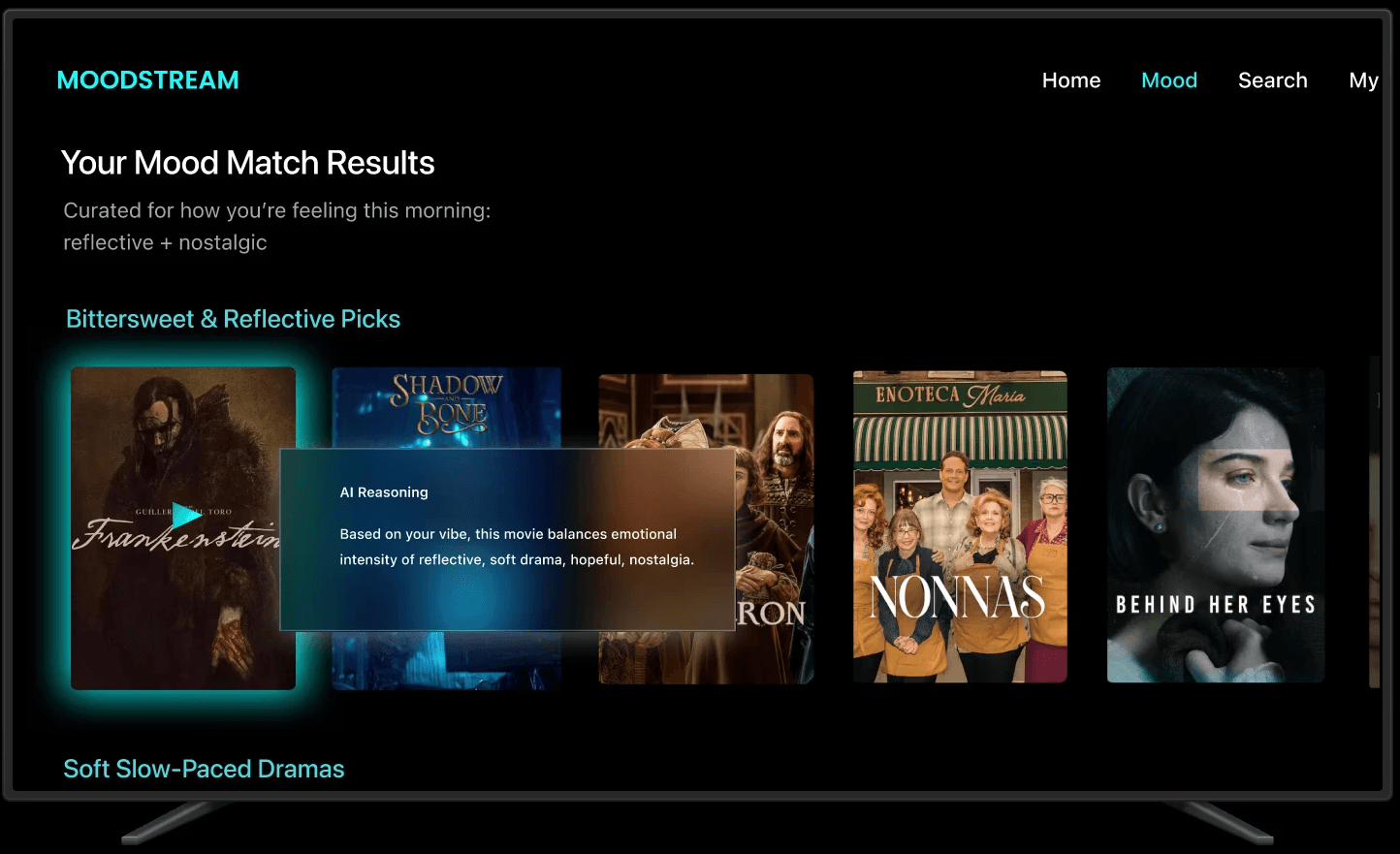
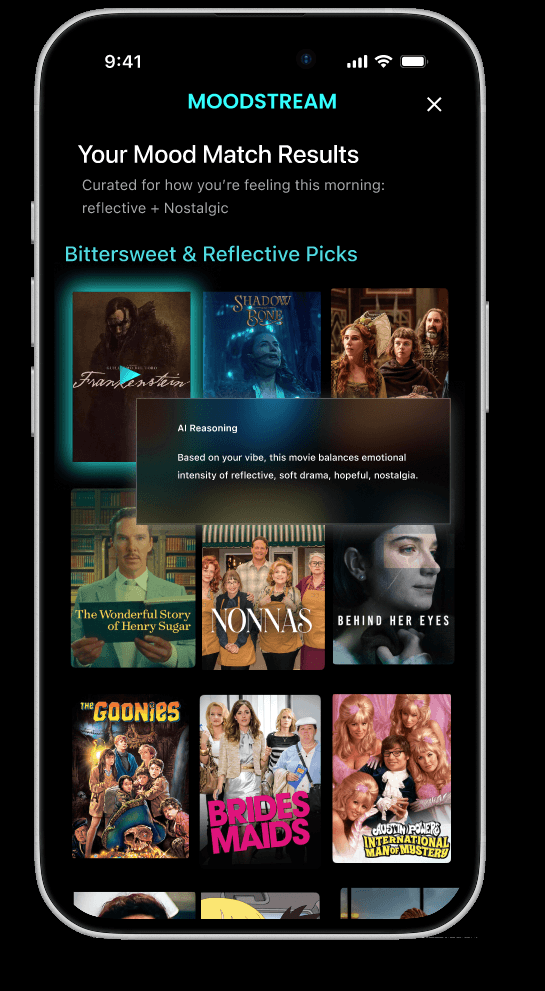
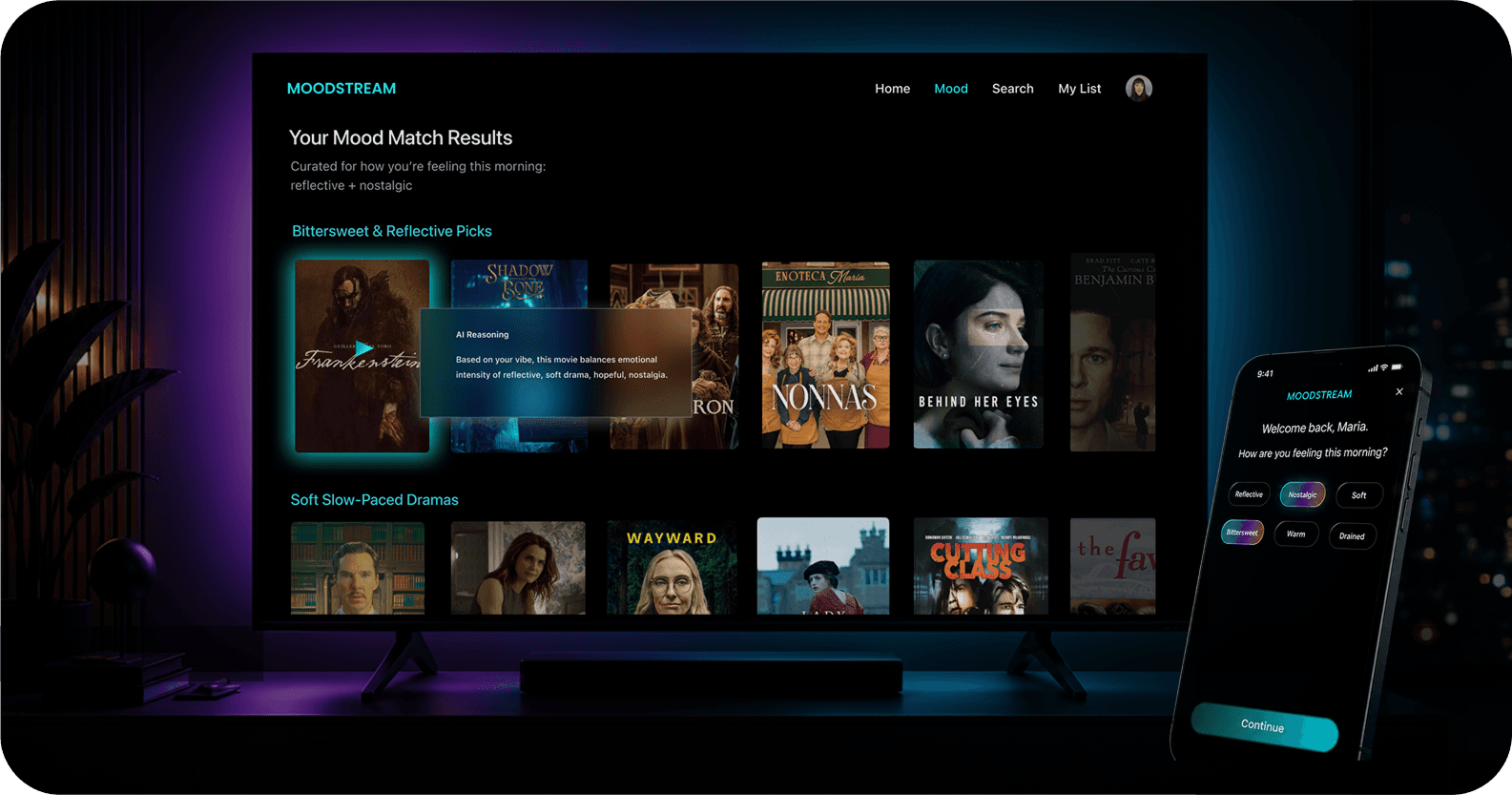
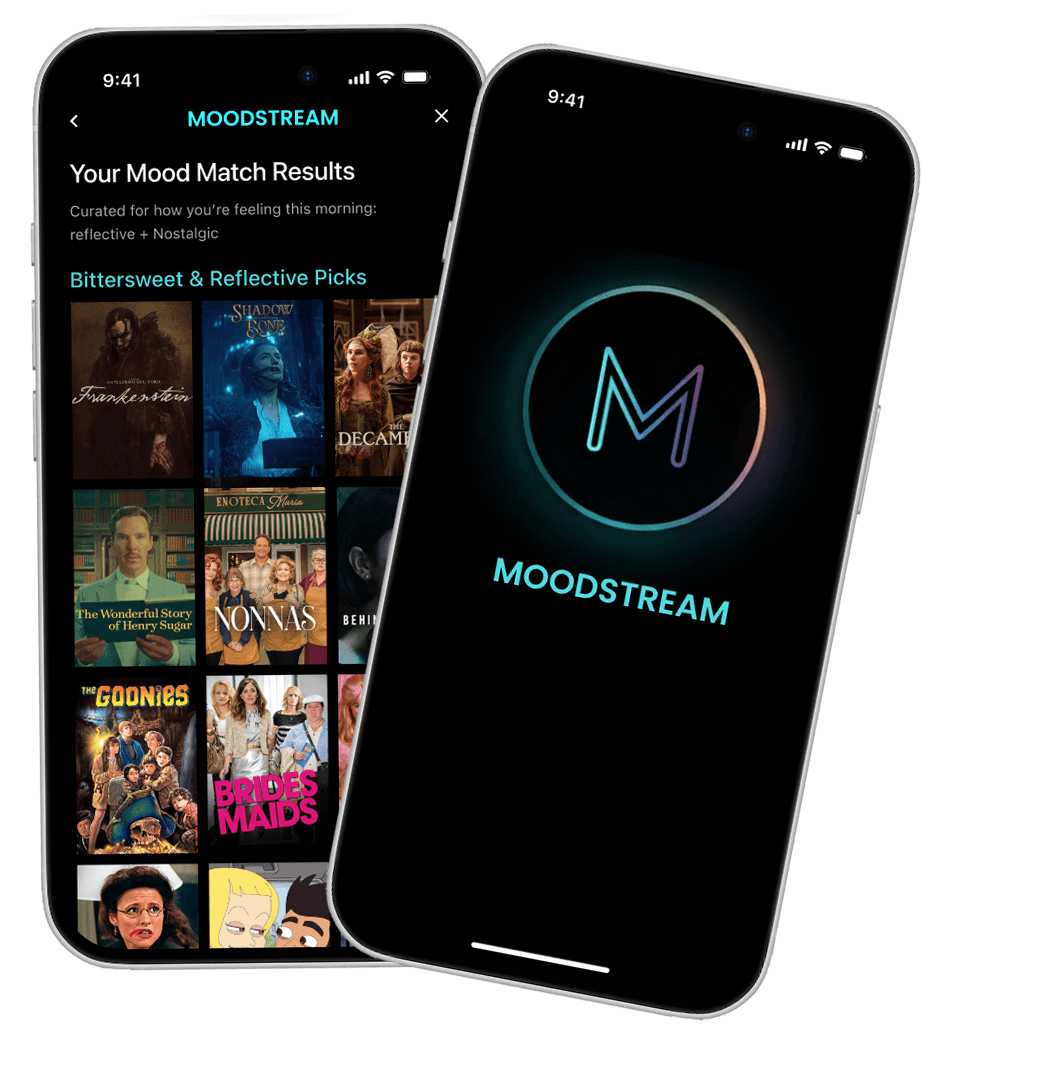
MOOD MATCH CATEGORIES
AI curates content into categorized groups based on user's feedback.
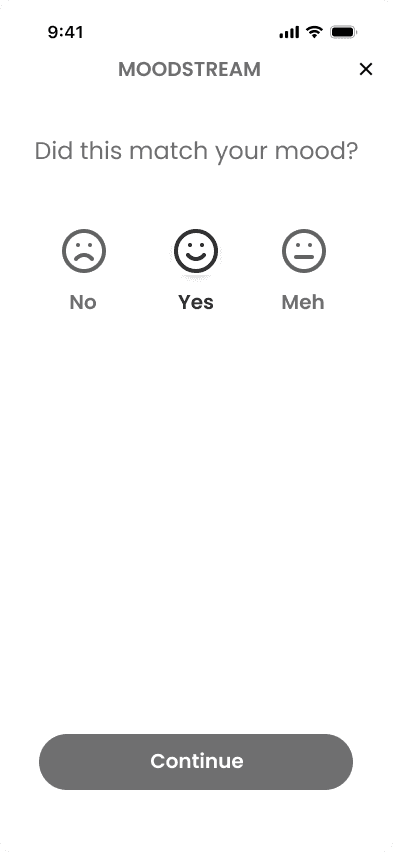
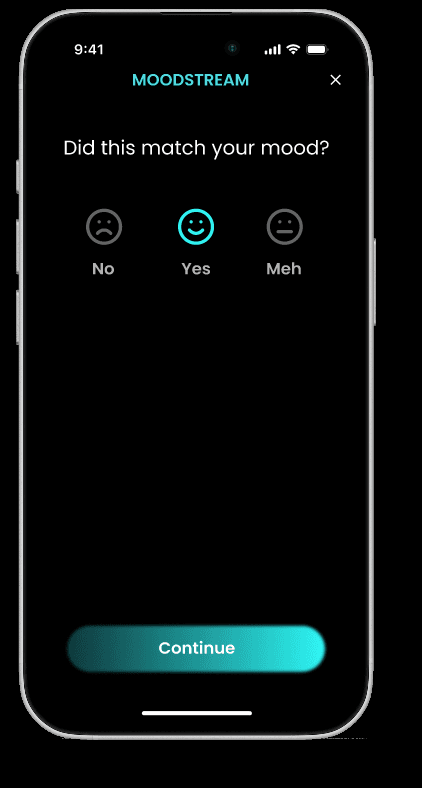
MOOD FEEDBACK
AI gathers data after user finishes watching content; stores for future recommendations.
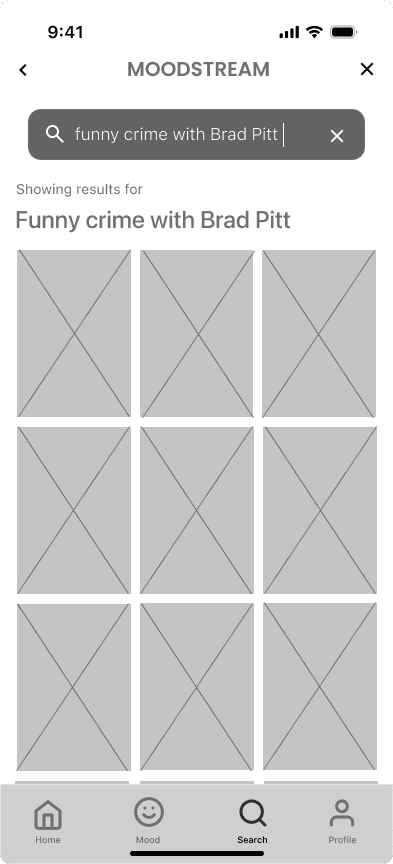
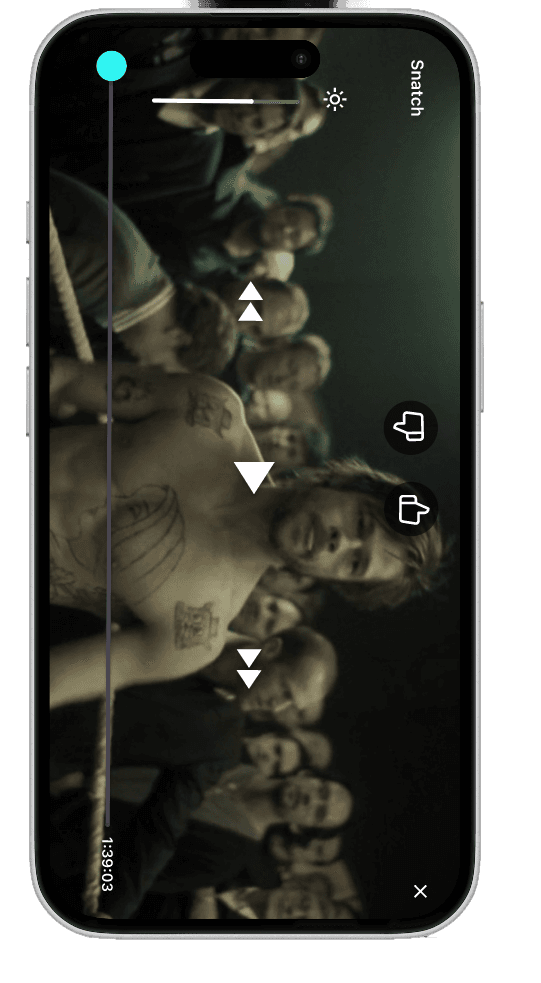
CONVERSATIONAL SEARCH
AI interprets conversational language to match user with content that fits their present mood.
BUILDING THE BRAND
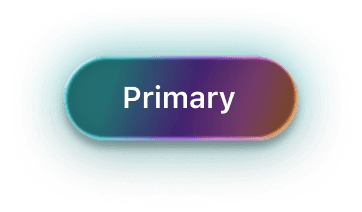
I wanted the design to be sleek, innovative, and fun. Energetic teals highlight important information in a dark gallery background showcasing content posters. I was inspired by the concept of a mood-ring to magically anticipate the needs of the user and gamify any data check-ins with colorful buttons and palettes.

LOGO DESIGN

MOODSTREAM
TYPOGRAPHY
MOOD BUTTONS



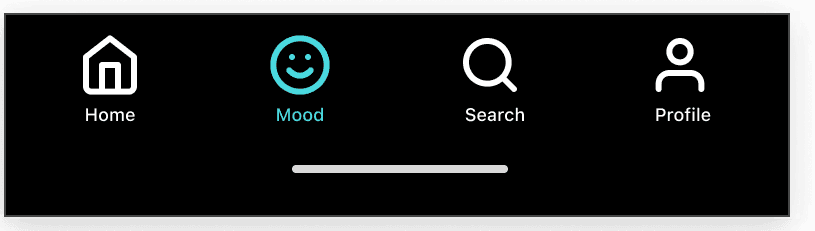
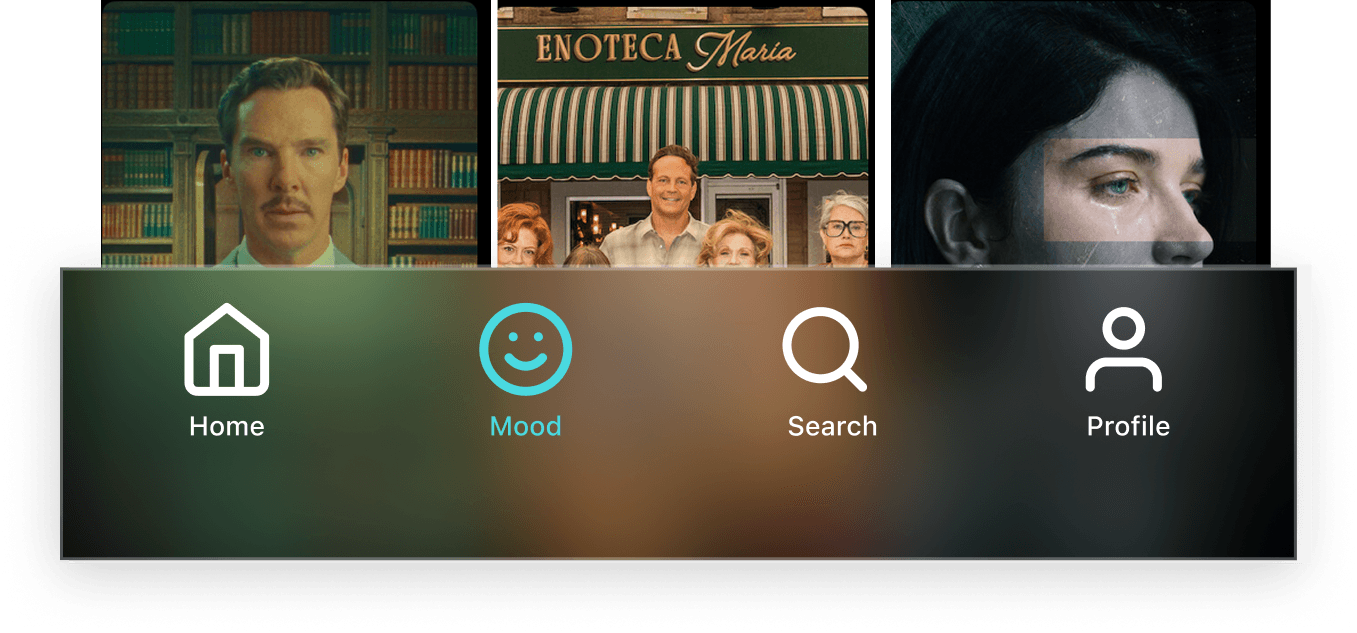
ICONS & BOTTOM NAVIGATION


BUTTONS




POP UP CARD

USABILITY TESTING & DESIGN ENHANCEMENT
METHOD
Moderated in-person paper prototype testing
PARTICIPANTS
Heavy-streaming users ages 28-55
SCOPE
Evaluate conversational search
Test recommendation transparency
Identify friction in discovery flow
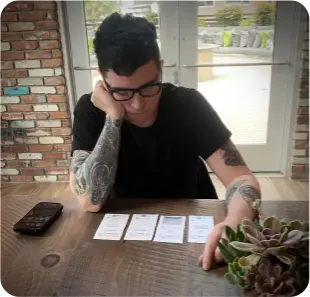

I conducted rapid-testing to get early feedback from heavy streaming platform users.
RESEARCH INSIGHTS
TOO MANY STEPS
Users felt multiple questions slowed discovery.
VOICE FELT NATURAL
Users preferred speaking casually over typing.
TRANSPARENCY BUILDS TRUST
Simple explanations worked better than complex AI descriptions.
KEY FUNCTIONS
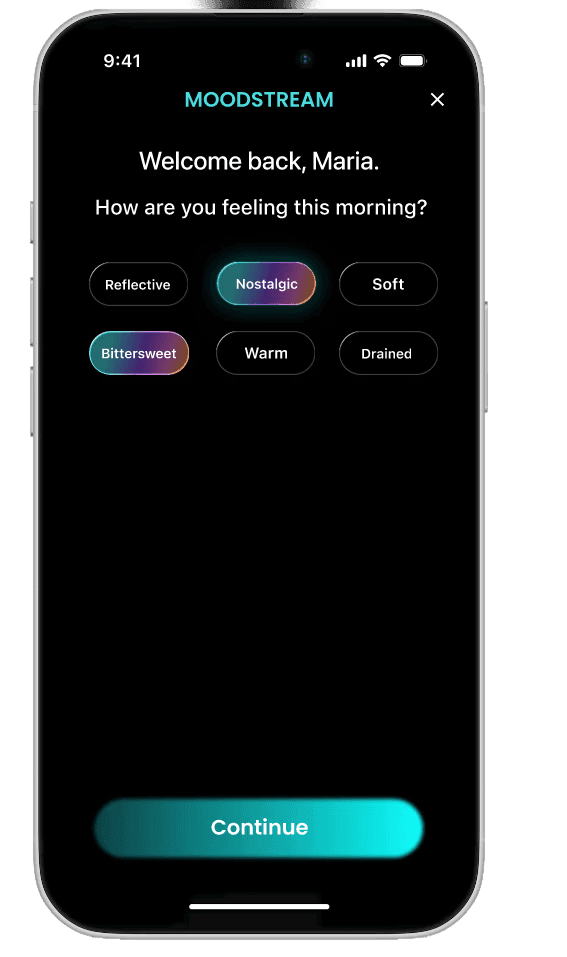
MOOD MATCH
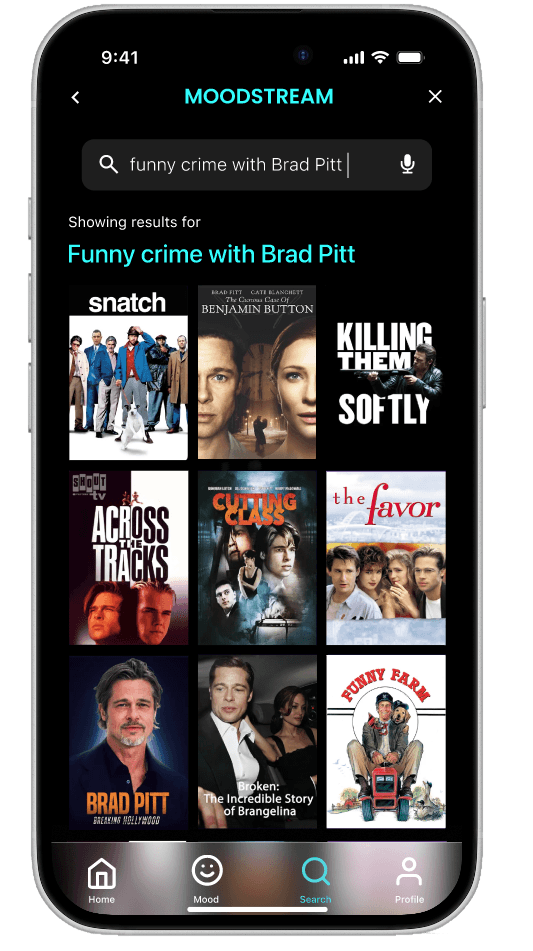
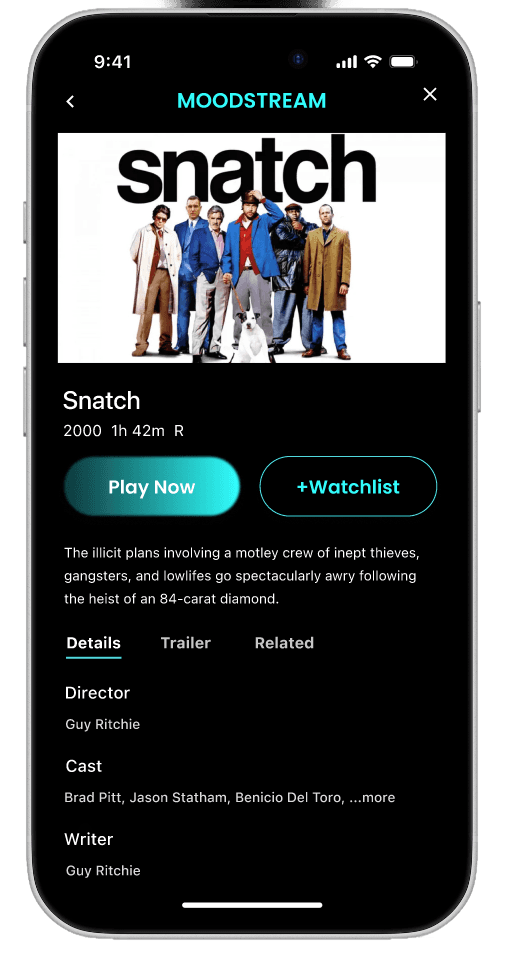
CONVERSATIONAL SEARCH
Natural language search such as "funny crime
with Brad Pitt."
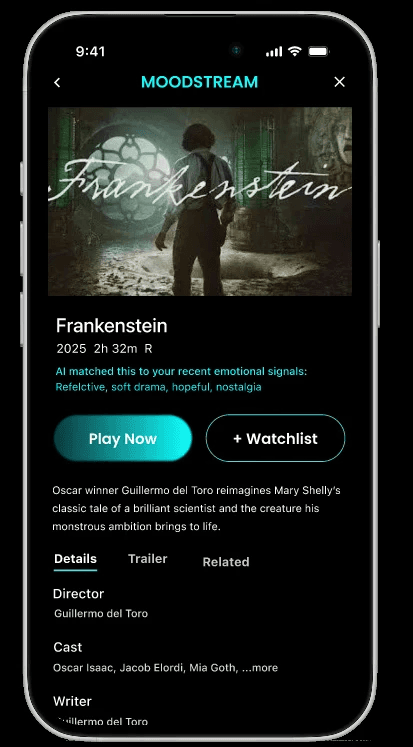
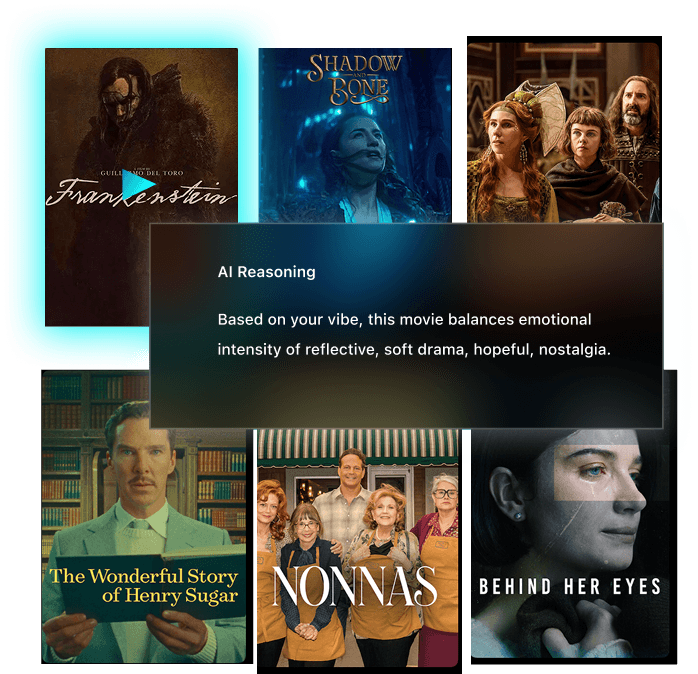
AI TRANSPARENCY
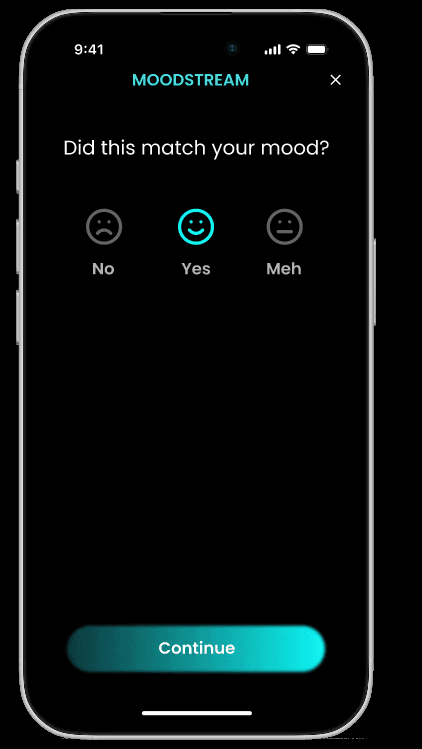
VIBE CHECK
ITIERATIONS + REFINEMENT
Testing insights directly shaped the final experience.
REFINEMENT #1: REDUCED DECISION FATIGUE
Before: Multiple prompts & additional decision screens
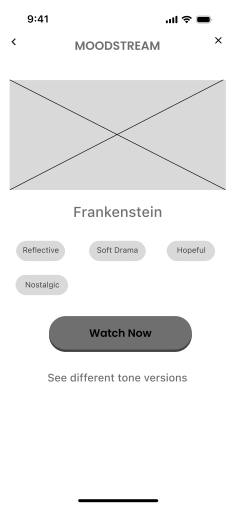
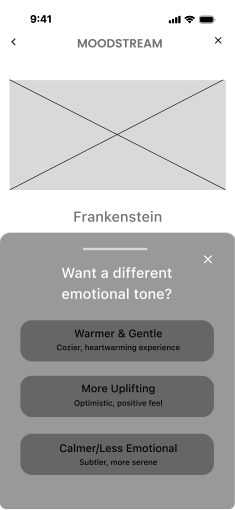
RESULT
Faster discovery & less cognitive load
After: Direct w/ fewer questions - simplified flow
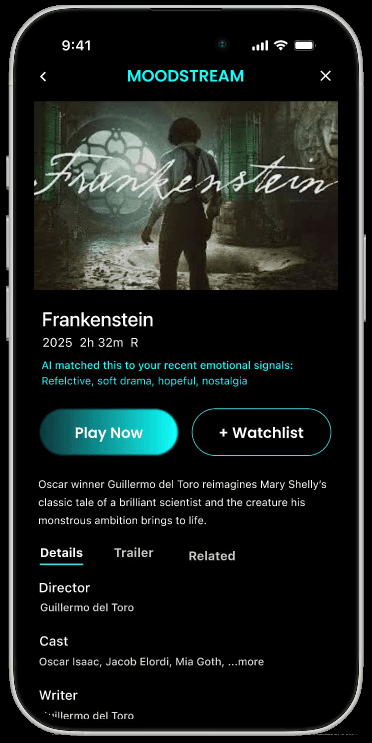
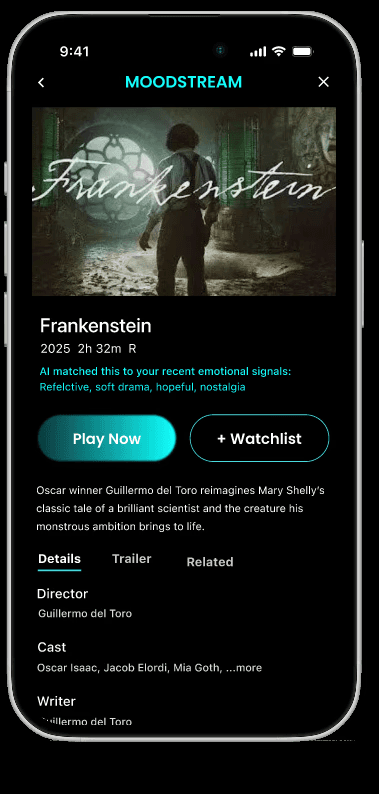
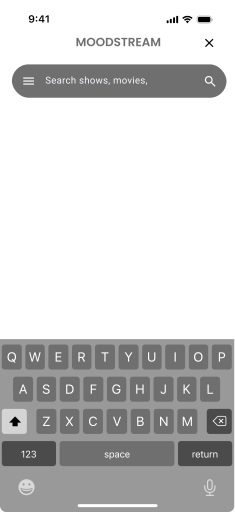
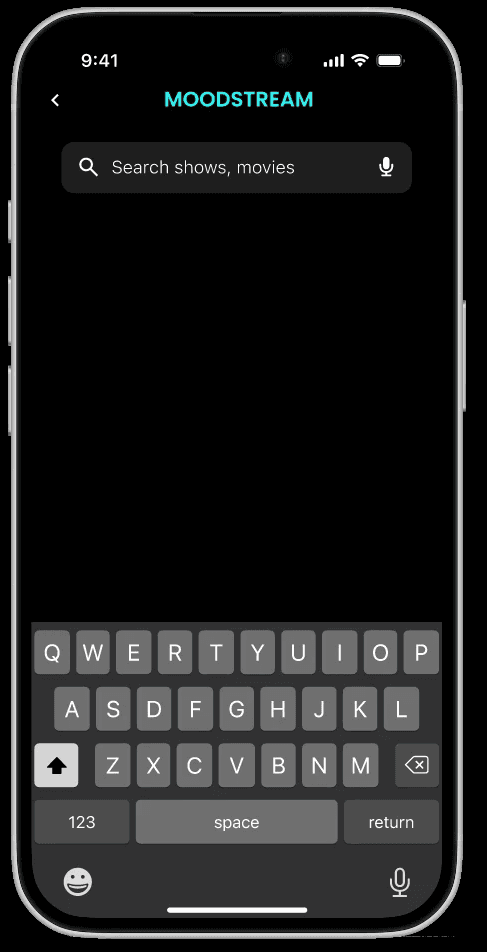
REFINEMENT #2: ADDED CONVERSATIONAL INPUT
Before: Typing required for search
RESULT
More natural interactions and lower effort
After: Voice input integrated into search
GLOW TREATMENT RESEMBLED HOVER BEHAVIOR
Distracted from movie artwork
Felt stronger for TV/desktop interactions
Reduced visual clarity on mobile