
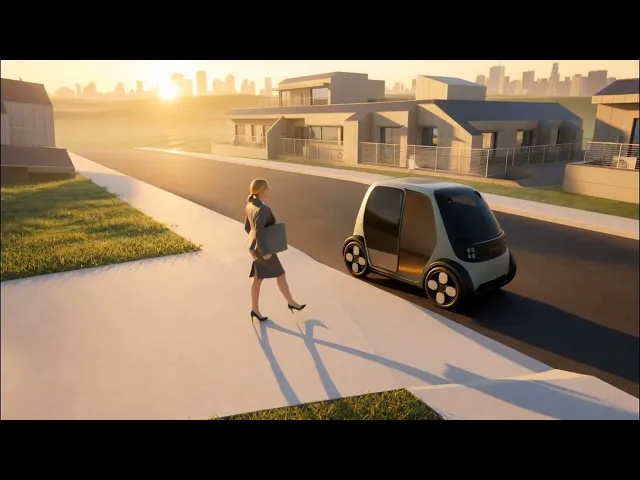
Designed a contextual UI/UX ecosystem for autonomous mobility that transforms stressful urban commuting into a safe, seamless, and restorative experience. Completed through a Bay Area design challenge in collaboration with Zoox and AAU.
ROLE
Lead UI/UX Designer
TOOLS
Figma
Adobe CC
TEAM
1 UI/UX Designer
3 Industrial Designers
DURATION
4 Months
THE CHALLENGE
In dense cities like Los Angeles, daily commutes are stressful, unpredictable, and inefficient. Safety concerns, constant delays, and fragmented services, create friction at every step turning something as simple as getting from point A to point B into a mentally draining experience.
Pain points
Stressful, unpredictable commutes in dense urban cities
Lack of trust and transparency in autonomous systems
Safety concerns with human drivers and city environments
Disconnected experiences across rides, food, daily tasks
Limited in-vehicle comfort and customization
THE APPROACH
How might we design a seamless autonomous mobility experience that transforms everyday commuting into a "sanctuary in motion"?
EXPLORATION
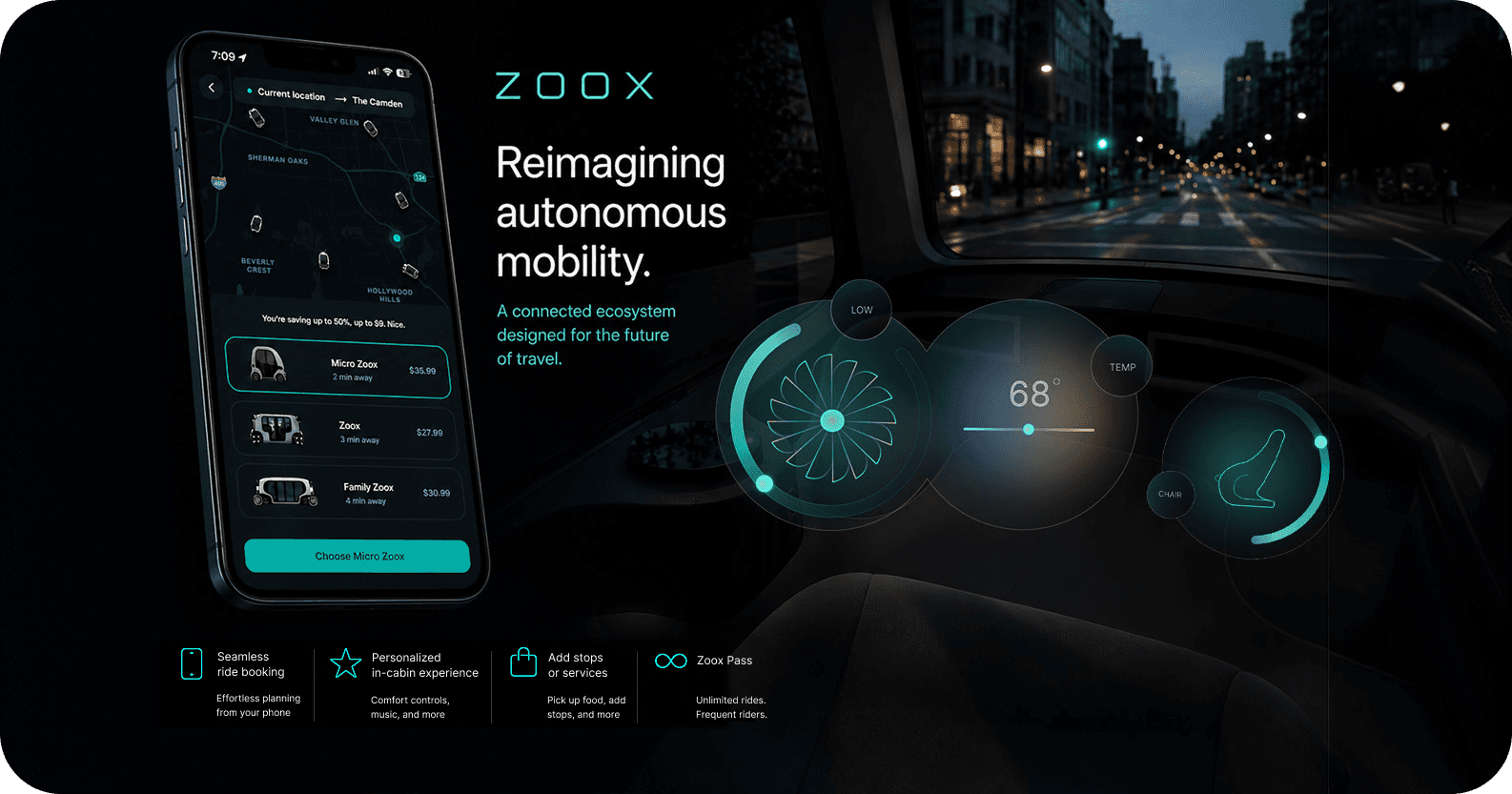
Commuters navigate fragmented experiences across transportation, food, and daily tasks. How might we create a seamless ecosystem that reduces friction and turns travel time into a more personalized experience?

INTERIOR UI SYSTEM
KEY DECISIONS
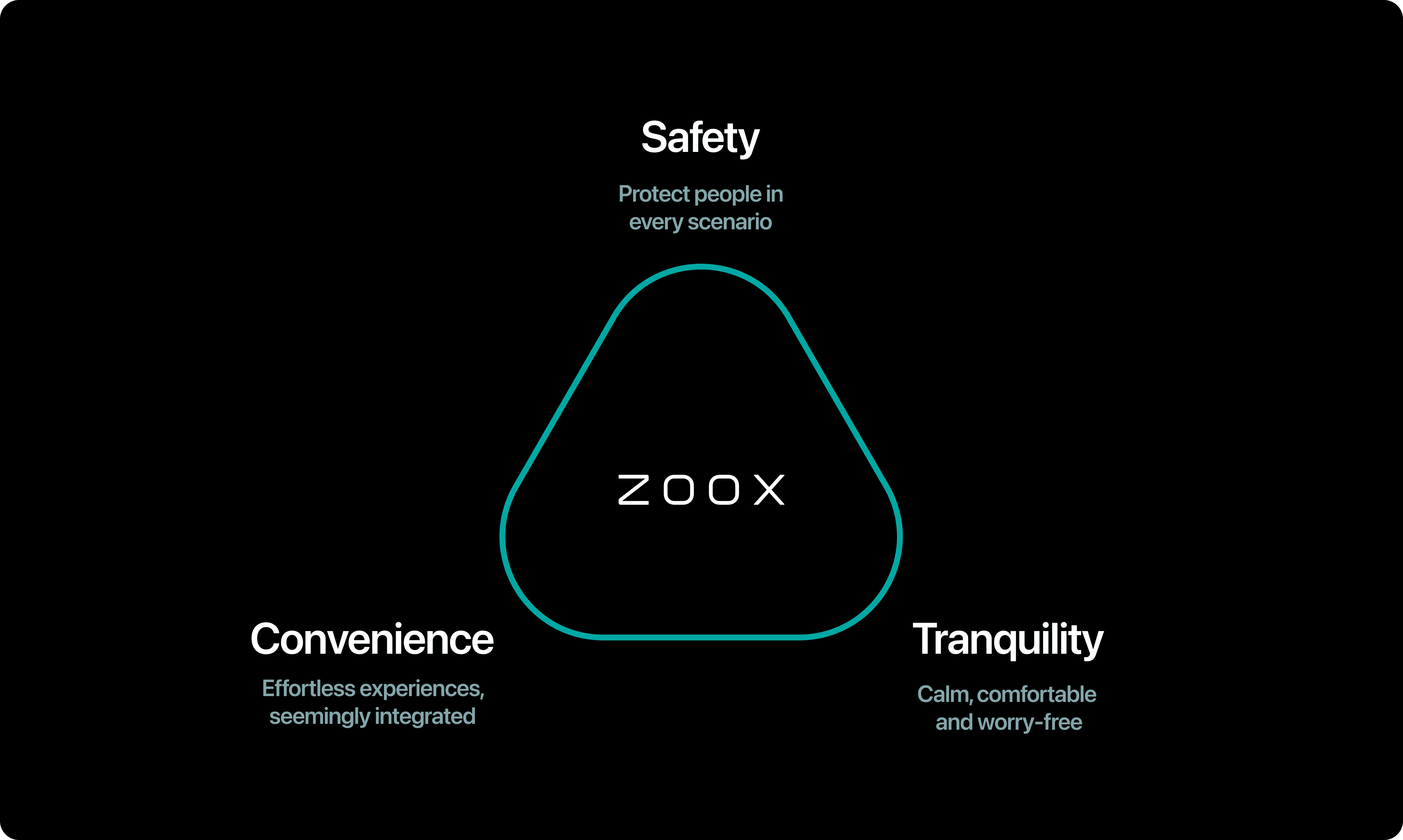
Trust through anticipation
Seamless daily integration
Integrating food pickup directly into the ride flow eliminates context switching & supports everyday routines.
Sanctuary in Motion
Minimal controls & ambient feedback create a calm experience that reduces cognitive load.
FINAL SOLUTION
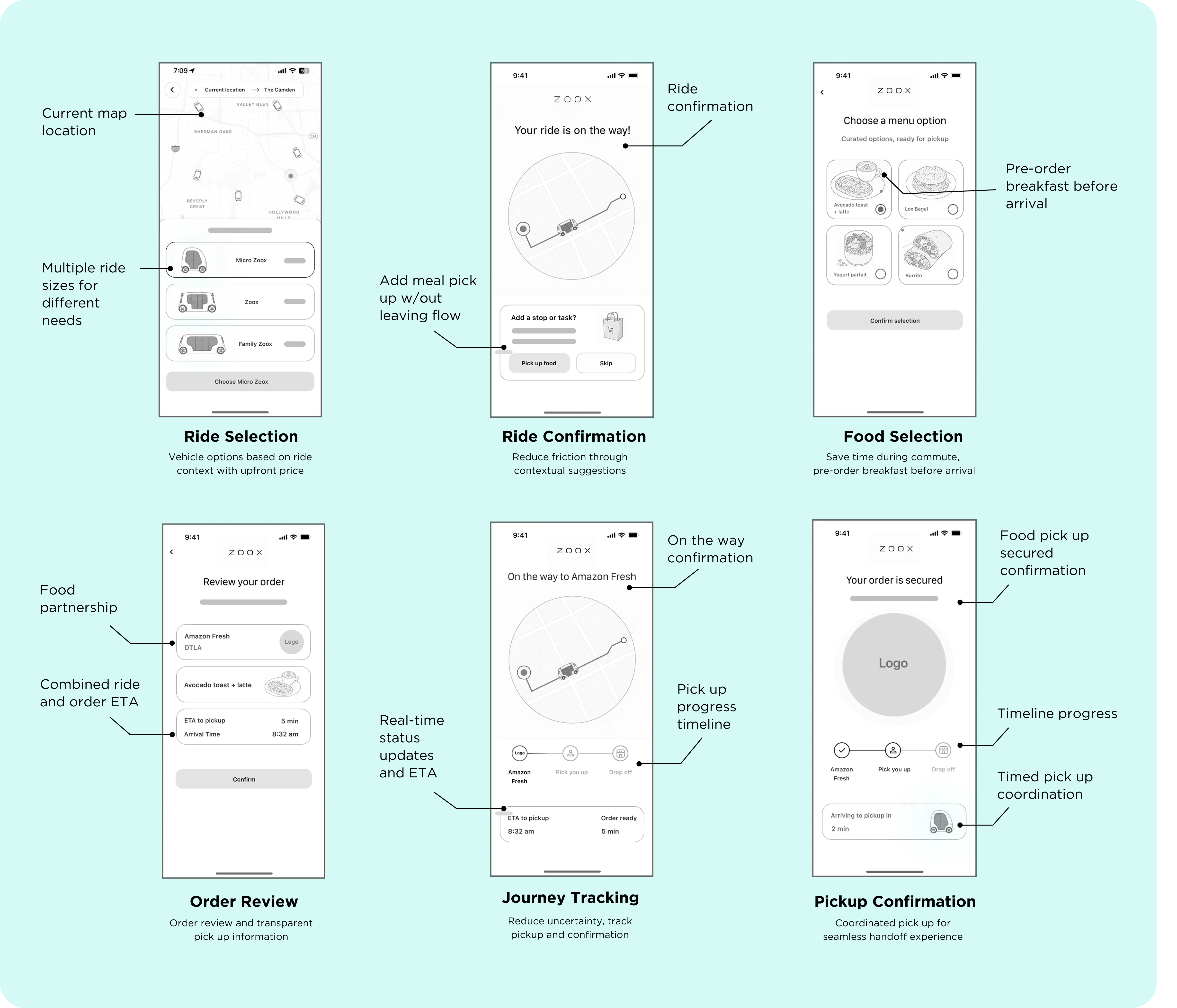
Five key screens showcasing the Zoox ride hail flow with commuter food pick up.
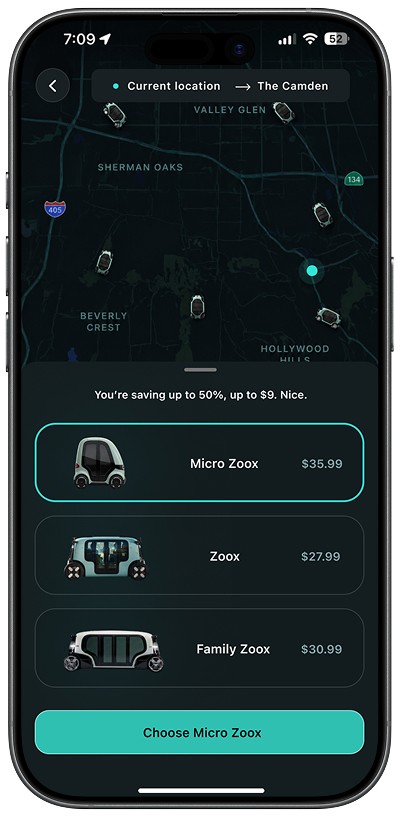
Ride Selection

Ride Confirmation

Food Selection

Journey Tracking

Pick Up Confirmation
IMPACT
Reduced Friction
Integrated transportation, errands, and daily tasks into one journey
Human-Centered
Designed around comfort, personalization, and well-being
Future Mobility
Explored a human-centered model for autonomous transportation
REFLECTION
Designing autonomous experiences means designing for emotions, not just transportation. I learned that reducing cognitive load and anticipating user needs can transform travel from a task into a restorative experience.